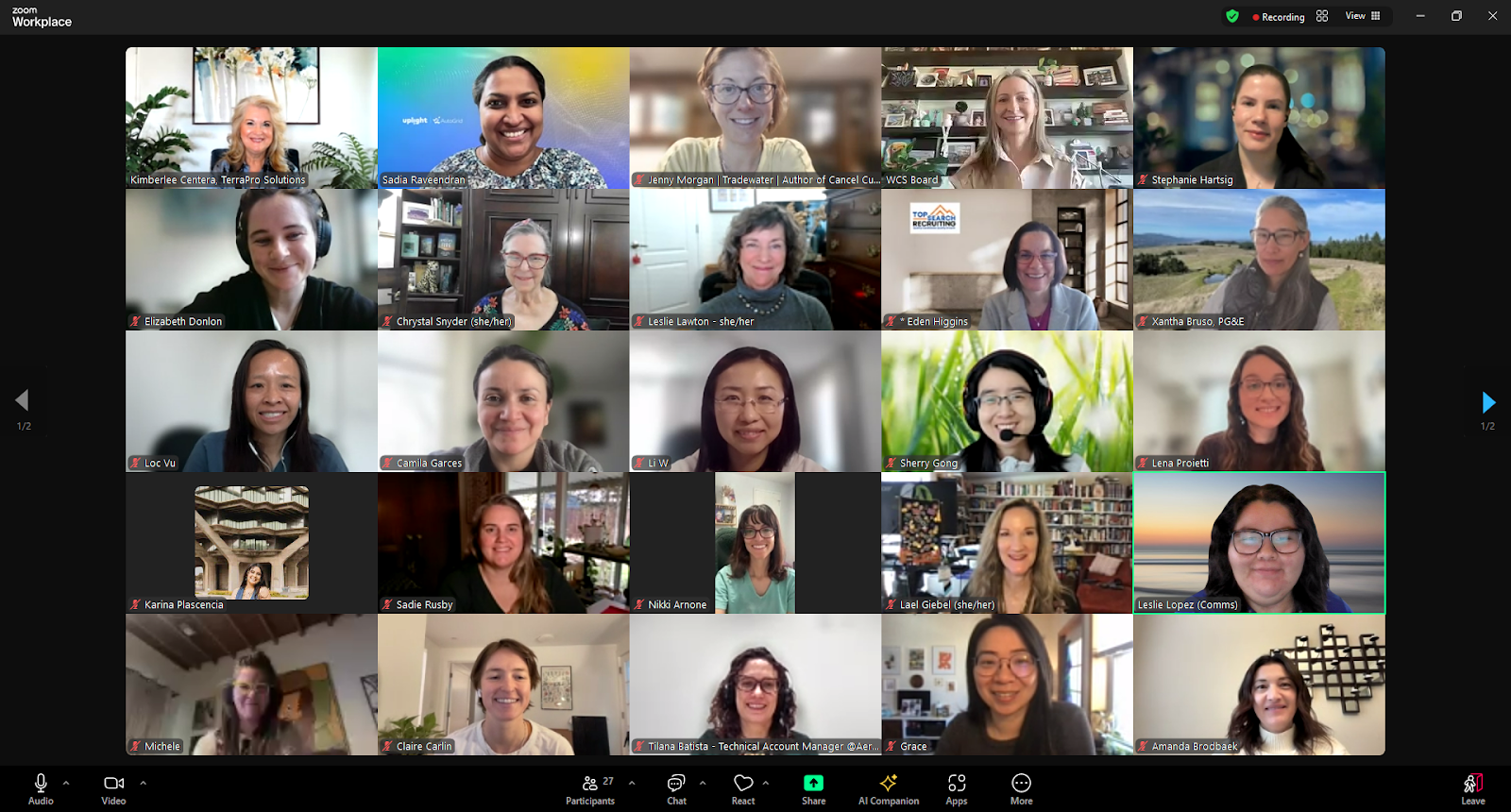
Session #3 Recap – Personal Career Journeys & Elevator Pitches
The Women in Cleantech and Sustainability (WCS) Mentorship Program held its third session for the 9th program cycle on March 27th, 2025. With the program slowly coming to an end with this session, a gentle reminder is to be made that the purpose of this program is to help women professionals build a community in the cleantech and sustainability sectors while learning new skills to advance or transition their career journeys. Along with the group session workshops this program provides, participants are divided into mentor/mentee pairings and asked to share stories and learn from one another.
Before starting the main session, the group was prompted to participate in a “Give & Get” exercise, which is aimed at having people reflect on how they can be proactive and involved within the mentorship program community.
Group Ice Breaker – Give & Get
- Give: What can you offer the group? Any special skills or resources you can share? People in your network you can make intros to?
- Get: What do you need from the group? Do you have challenges that you need help solving? Want to hear from someone else’s experience on a particular situation/topic?
Many individuals in the group offered their knowledge and expertise to help others while also hoping to grow their own network. This sense of camaraderie helped transition into the next segment, the personal career journeys panel, as the panelists reflected on the key message of the importance of mentorship and perseverance.
Fireside Chat Questions:
- Tell me about your personal journey (how you got into the industry and what your career path was).
- Sadia Raveendran:
- “My entire career has been in energy and cleantech. I started in utility, specifically utility-scaled solar projects. I got to be part of the growth of solar in India and I was involved in some of the first largest scaled solar projects of the country at the time.”
- “I chose to go into industry before going to graduate school, which helped me further my interest in clean energy and cleantech.”
- “I was part of a lot of rotational programs at the start of my career, which was hugely valuable for me. It allowed me to get a 360 view of a business: the supply chain, product management, commercial operations, etc. Then I dove deep into product management and found that I like roles where I get to do a little bit of everything. Use your career journey to learn more about yourself, what works for you, and what doesn’t.”
- Sadia further explained how she emphasized learning and growth throughout her career. She reached a point where she wanted to prioritize her personal life just as much as her professional life, so she took the risk of leaving an established company and moving to a startup. With the knowledge she gained, she felt it was the best decision she could have made. This decision wasn’t made lightly as she had known she was going to have to climb the ladder once again and lose her company connections. Eventually, she learned that she thrives in smaller companies and can manage ambiguous working environments.
- Kimberlee Centera:
- “From my perspective, I founded a business. I never thought I’d be an entrepreneur; it was never on my radar. I work in renewables, and my company consults in energy projects for real estate. I had a legal background, and that experience helped me when I started my renewables career.”
- “I had no idea renewables existed, I didn’t know it was an industry.”
- “I got really good at understanding risk. It was a great beginning (to my career).”
- “Renewables can be a chaotic industry, and people even ask me now about what’s happening in the market. I think about how many years I’ve been doing this and the highs and lows. I think you have to be resilient in this industry.”
- Kimberlee continued with her discussion and mentioned the turning point in her career. The parent company she worked at was transitioning out of renewables, and she was left at a crossroads of problem-solving her next steps. She had all of this knowledge and expertise that she could leverage. She thought about whether she wanted to put her future in someone else’s hands. She decided to take the bet on herself and take the chance. You learn as you go. Kimberlee took advantage of her network and established herself in this sector. She is open to providing insight on starting a company and the lessons she has learned over time.
- Jenny Morgan
- Jenny currently works for a company called TradeWater, which prevents non-CO2 gases from entering the atmosphere. She recently wrote a book called “Cancel Culture in Climate” aimed to stop dividing and start to find common ground.
- “I have an unusual career path. I’ve found something that I enjoyed, and it just continues to take shape.”
- She started as a psychology major in college and transitioned into hospitality, which led her to trade shows. These shows gave her a broad view of the business world as they delved into what seemed like every topic imaginable. Jenny resonated with the ones who spoke about community and empowerment.
- “…this has been the whole way I’ve moved throughout my career. This doorway is locked, so I’m going to see which window they forgot to shut.”
- Jenny continued speaking on her growing career and how she learned various topics that were interconnected. She realized that while she was developing this expertise in inclusive practices in business, there was a disconnect because she hadn’t considered sustainability. From there, she went down a rapid self-learning climate route and started integrating these teachings into her daily work. She kept adding new ways to integrate climate into her work, but she also created a consulting company and later got involved with a climate solutions group. She enjoys being proactive and seeing the results of the work she’s putting into this cause, given her fast-paced background. As she became more involved in climate work, she noticed the behavioral patterns that hindered this type of work from moving more quickly, so she felt compelled to write her book on this theme.
- Sadia Raveendran:
- What are the top 2 challenges in your career?
- Sadia Raveendran:
- Sadia discussed how both challenges came from being in the startup environment and the changes she experienced. The first was that everything was overwhelming and that she had to manage multiple things at once. She would do damage control as things came through, but she eventually learned to take a step back and be more intentional with her work moving forward. The second challenge was transitioning from an individual contributor to a manager position, and it’s a skill that needs to be practiced. She had to learn how to delegate effectively and guide her team into learning valuable lessons.
- Kimberlee Centera:
- Similarly to Sadia, Kimberlee had to learn how to let go of certain thoughts and expectations. She’s very tenacious but had to be strategic about her work operations. She loves building good partnerships, but it takes strength to know when to walk away or shift gears. This is why she learned to be intentional in her work and delegate things. She had to build an environment where people could grow and feel empowered.
- Jenny Morgan:
- Jenny agreed with all of the points Sadia and Kimberlee brought up during their responses. However, Jenny has found the idea of bureaucracy challenging. In this case, having rules for the sake of having rules. She has had trouble ensuring that she respects set boundaries while formulating questions to reassess why certain boundaries have been put in place to begin with. It’s challenging to play politics and learn the skills needed to do so since it does not come naturally to Jenny. Additionally, she finds the concept of balance challenging. She’s working on this and feels that she will likely need to continue figuring it out because of the nature of how she works.
- Sadia Raveendran:
- Lighting Round: What are you most proud of in your career?
- Sadia: Transitioning from a corporate conglomerate to a startup and maximizing that opportunity.
- Every important or major moment in her career, she relied on her mentors for support.
- Kimberlee: Her business and the perseverance of being a woman founder of a small business, as well as having to make difficult decisions in the face of hardships.
- Jenny: Currently, she is most proud of publishing a book. She enjoyed the experience and is thrilled that the book is resonating with others.
- If you ask her this question every few years, her answer will change, and she enjoys that fluidity of success.
- Sadia: Transitioning from a corporate conglomerate to a startup and maximizing that opportunity.
Q&A/Comments for Panel:
- Chrystal Snyder (Mentor)
- “I was so informed and so inspired. I love being a part of WCS because of the brilliant women that I get an opportunity to learn from and hopefully meet soon after.”
- Camila Garces (Mentee)
- “I’m thankful that you shared your experiences with us. I am in a transition, and it’s very difficult to reassure yourself that you’re taking the right path.”
- Stephanie Hartsig (Mentee)
- “I loved getting to start my morning hearing these stories and especially getting the step-by-step into how your career progressed.”
- Li Wei (Mentee)
- “I also left the corporate world and started the startup journey last year. How do you manage handling so much?”
- Kimberlee: “It’s okay to let go and create boundaries. You have to prioritize yourself as well.”
- Sadia: “You start to understand the patterns of work and take breaks during the slower times.”
- “I also left the corporate world and started the startup journey last year. How do you manage handling so much?”
Elevator Pitch Breakouts
At the end of the session, attendees were placed into breakout rooms to practice their elevator pitches and receive feedback. Some key elements to look out for were the hook, a unique skill or strength, the target audience, the impact, and a call to action.
We are at the end of our official program, with only our optional 4th session dedicated to networking remaining. We hope the WCS community has enjoyed seeing these updates. Stay tuned for our last recap of the entire program.
For more information about the Mentorship Program, visit our page: https://www.womenincleantechsustainability.org/mentorship/
If you’re interested in being involved in the 2026 WCS Mentorship Program, contact us here: careerdev@womencleantechsustainability.org

Kimberlee Centera
CEO at TerraPro Solutions
About Me:
Risk management expert for the development and financing of large-scale generator energy projects with strategic ability to identify, manage, and mitigate risk. Proven track record engaging and leading stakeholders in the analysis and resolution of legal issues, consistently delivering results on complex high-value projects.

Jenny Morgan
Author of “Cancel Culture in Climate”
About Me:
With a passion for creating sustainable change, Jenny helps companies integrate sustainable business practices that drive Triple Bottom Line results—balancing People, Planet, and Profit. Her expertise lies in Corporate Social Responsibility (CSR), Social and Environmental Impact Assessments, and developing strategies that align with sustainability goals to enhance both operational efficiency and brand reputation.
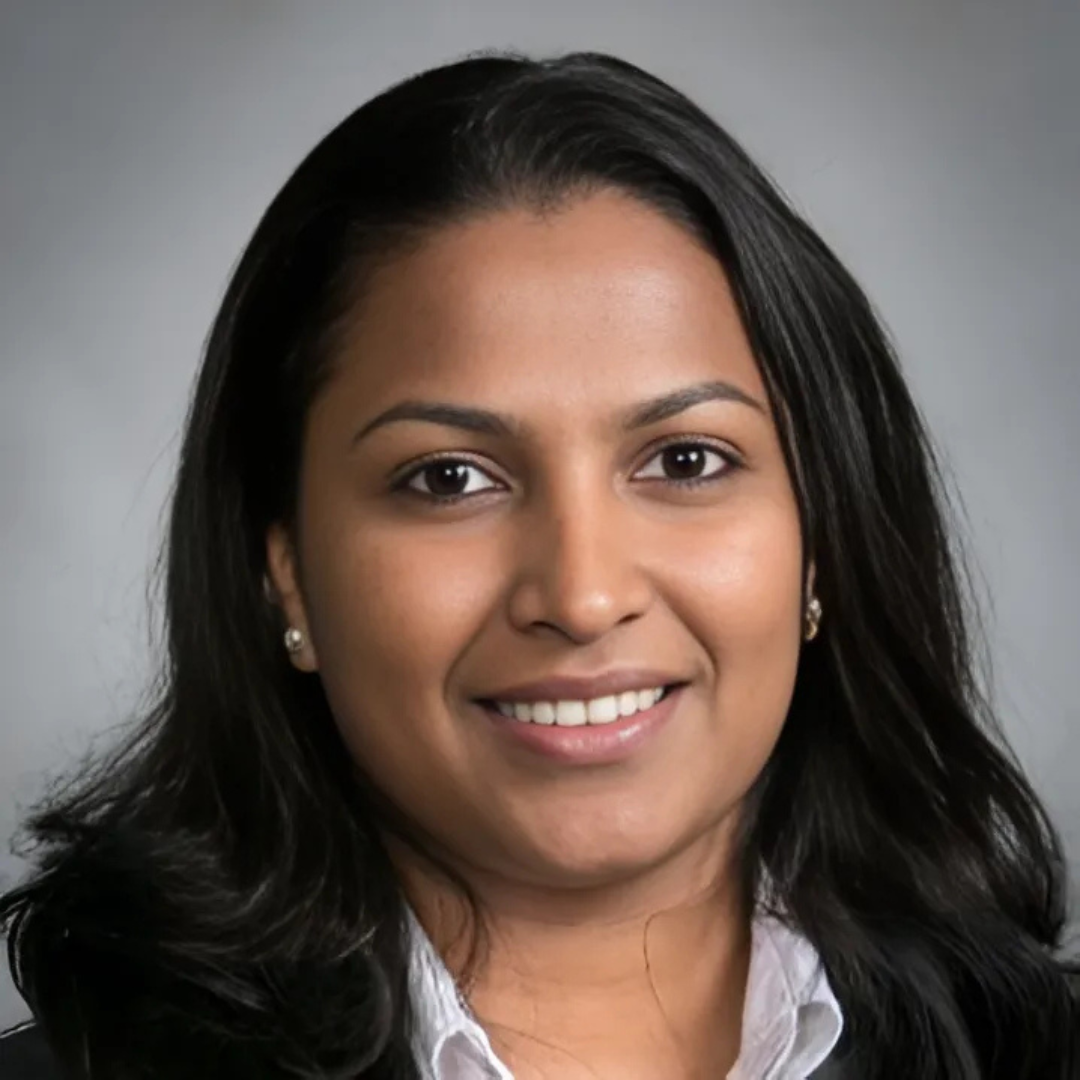
Sadia Raveendran
VP of Industry Solutions at Uplight
About Me:
Sadia is the VP of Industry Solutions at Uplight, the leading provider of end-to-end customer-centric energy optimization solutions that leverage the industry-leading DERMS and VPP platform. With nearly 15 years of experience in clean energy technologies, Sadia helps utilities, energy companies, and end consumers unlock the value of distributed energy resources (DERs) and achieve their decarbonization and grid modernization goals.