Productivity and AI: Key Takeaways from WCS AI Series Session 2
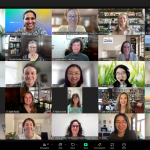
On a recent morning filled with curiosity, insight, and actionable tools, Women in Cleantech and Sustainability (WCS) welcomed members and guests to Session 2 of the AI Series: Productivity and AI – Getting the Benefits. Hosted virtually and sponsored by Product Rehab, this session explored how small and mid-sized businesses can meaningfully adopt AI to enhance productivity, reduce workload, and drive revenue.
Unlocking the Value of AI for Small Businesses

Moderated by Darlene Crane of The CraneWorks, the conversation featured two powerhouse speakers:
Pubali Sen, AI/ML Specialist at Google
Rob Barlow, Professor and Research Fellow at Hult International Business School
Together, they brought a powerful blend of technical expertise, design thinking, and a pragmatic approach to AI strategy.
Practical Use Cases for AI
Pubali Sen reminded us that AI isn’t reserved for large corporations—it’s increasingly accessible and ready to be deployed in small business operations. She spotlighted several high-impact uses:
- AI-powered chatbots for customer service
- Sales automation and lead generation through CRMs
- Content creation using tools like ChatGPT, Jasper, and DALL·E
- Personalized marketing recommendations using data-driven insights
Her advice? “Start where it hurts—where you’re wasting time, money, or momentum—and let AI help.”
Strategy First: Design Thinking Meets AI
Rob Barlow introduced a design thinking framework tailored for AI integration:
- Empathize with users
- Define the specific business problem
- Ideate potential AI solutions
- Prototype and test before scaling
He illustrated this approach by building a custom grant-writing assistant using ChatGPT in just 10 minutes. The tool helps small teams produce high-quality proposals, freeing up precious time and resources.
Building Team Buy-In and Culture
Adopting AI isn’t just about tech—it’s about people. Both speakers emphasized:
- Starting small with low-risk pilots
- Providing user-friendly tools
- Offering employees time to explore and learn
- Maintaining a human-in-the-loop for oversight and brand consistency
Barlow summed it up: “Don’t wait for perfection. Create a culture of experimentation.”
Responsible, Ethical, and Secure AI Use
As small businesses begin leveraging AI, ethics and data privacy must remain front and center. Sen recommended:
- Establishing clear internal AI use guidelines
- Using enterprise-level tools with proper data security
- Conducting bias detection audits
- Considering a lightweight AI Ethics Committee as you scale
Barlow referenced the NIST AI Risk Management Framework as a helpful resource for evaluating potential risks and governance strategies.
The Road Ahead: AI and Business Model Reinvention
As AI reshapes what’s possible, small businesses have a real opportunity to lead with agility and innovation. WCS emphasized that with the right tools and mindset, entrepreneurs and teams can shift from simply surviving to creating new value for their communities, customers, and industries.
Sen left the audience with a personal perspective: “I use AI to plan my day, organize events, and entertain my kids. If it can make my life smoother, it can do the same for your business.”
Thank You
Thank you to our speakers, moderator, sponsor Product Rehab, and everyone who joined us! We hope you left feeling inspired and equipped to make AI your productivity partner.