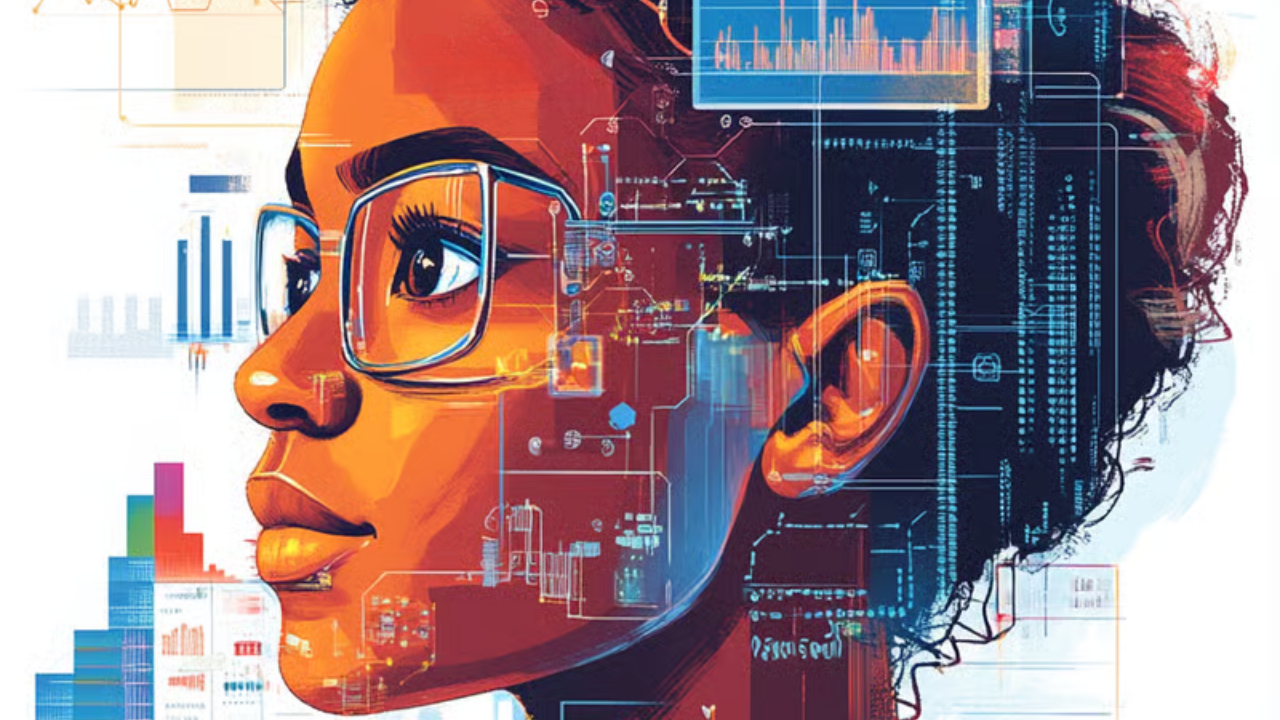
On June 10, Women in Cleantech and Sustainability (WCS) hosted the final session in its 2025 AI Series: “Shape the Big Opportunities with Generative AI: Lead Innovation and Drive Transformation.” The virtual event brought together forward-thinking professionals, entrepreneurs, and creatives to explore how generative AI is transforming business, leadership, and equity across sectors.
A Timely and Transformative Conversation
Moderated by business strategist Darlene Crane, the session featured two standout speakers:
Dr. Rhianna C. Rogers, a global leader in digital equity and AI policy, and Dr. Frederick Wehrle, Assistant Dean of Academic Innovation and Learning at UCLA Extension. Together, they explored the current state of generative AI, its future trajectory, and the practical tools and techniques required to navigate a rapidly evolving landscape.
Key Themes & Takeaways
- AI as a Force for Equity—If We Get It Right
Dr. Rogers set the tone with a powerful message: AI is more than a technical revolution; it’s a societal shift. She urged attendees to think critically about who is building AI systems, whose data is being used, and how algorithmic bias can widen disparities if left unchecked. Her example of a resume photo altered by an AI tool underscored how unseen biases can impact marginalized users. The call to action: adopt AI tools intentionally and with an equity lens. - From Assistant to Agent: The Evolution of Generative AI
Dr. Wehrle highlighted the shift from productivity tools to “agentic AI,” where AI begins to act as a collaborator, not just an assistant. He described how startups and individuals can leverage AI to simulate entire teams, conduct market research, evaluate proposals, and even embody expert personas to generate higher-quality output. - Why AI Must Be Understood, Not Just Used
Both speakers emphasized that simply using AI tools isn’t enough. Understanding the underlying models, how they’re trained, and how to prompt effectively is critical for innovation and originality. Dr. Rogers and Dr. Wehrle encouraged attendees to “train up” and compare tools like Claude, Gemini, and ChatGPT to gain a multi-dimensional perspective. Dr. Wehrle demonstrated how creating personalized AI “agents” with context and character can unlock new modes of productivity and insight. - Real Tools for Real Impact
Attendees were introduced to a host of accessible AI tools:
- ChatGPT, Claude, and Gemini for writing, research, and decision support
- Stability AI, Notion AI, and Canva AI for project management and visual storytelling
- Predictive modeling tools for sustainability and climate work
Importantly, both speakers advocated for using multiple platforms to reduce bias and diversify insights.
- Caution and Creativity Can Coexist
Dr. Rogers reminded participants that while generative AI offers incredible possibilities—from automating simple tasks to uncovering fraud—it must be approached with care. She encouraged citing AI-generated content appropriately and maintaining ethical practices, especially in professional and academic contexts.
Why This Session Mattered
Generative AI is not just transforming industries; it’s reshaping who gets to lead. Yet, women and small business owners remain 25% to 60% behind in adoption. The call to action is clear: now is the time to close that gap.
In the Bay Area, women use AI about 3% more than men. Our challenge is to increase the clarity of our contributions and respect for our voices as agentic AI and other advances evolve.
As Dr. Rogers shared, “If we’re not asking the right questions about how these tools are built and who they serve, we risk deepening existing disparities.”
What’s Next
Stay connected for more programming from WCS that helps women professionals lead in a tech-enabled, sustainable future. If you missed this session, keep an eye out for replays and future events that center equity, technology, and climate leadership.
Interested in becoming a WCS Member? Join us today and be part of a community that’s shaping the green economy—intelligently, inclusively, and boldly.